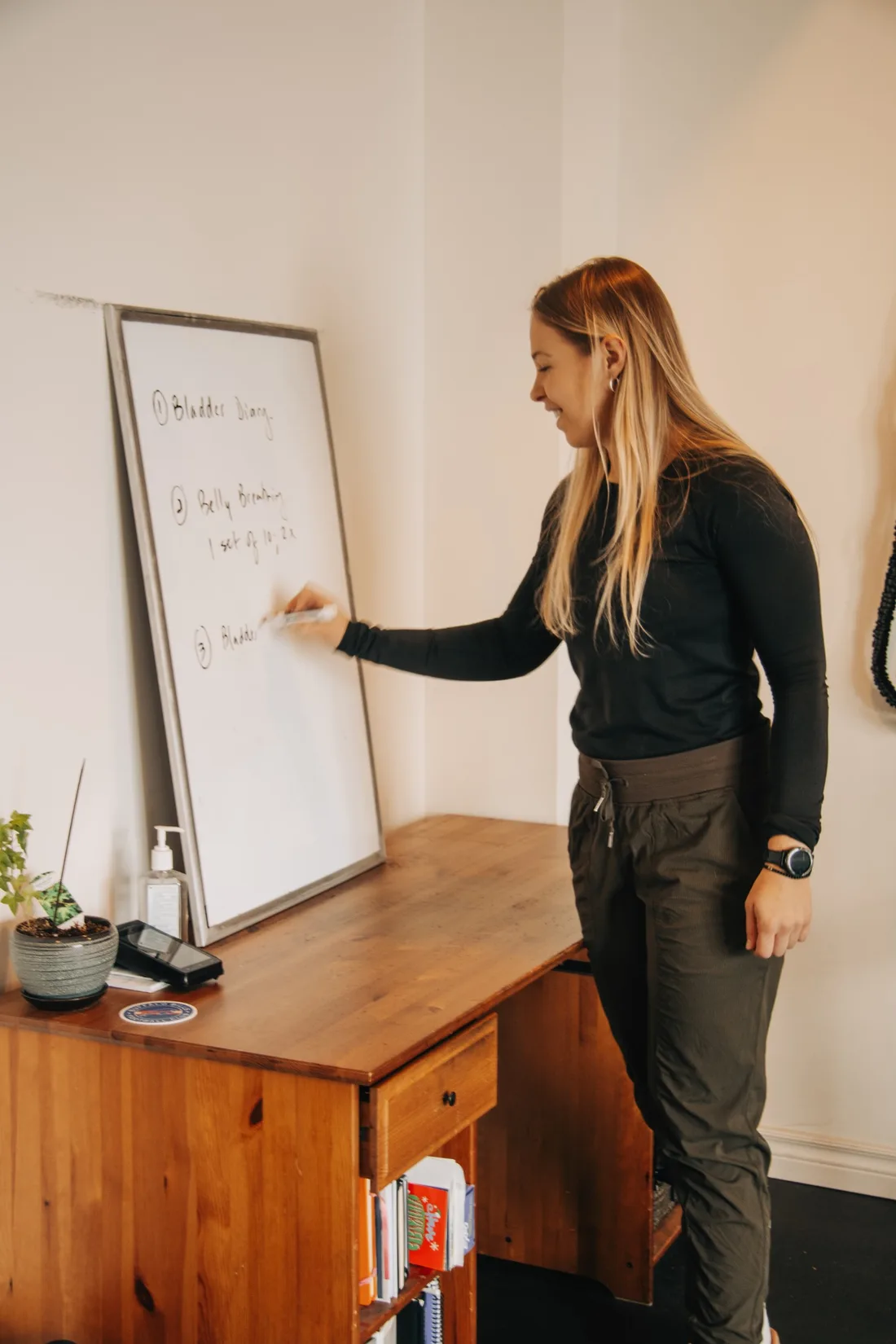
Your pelvic floor is not separate from the rest of you.
Pelvic floor muscles are muscles. They respond to injury, surgery, pregnancy, training load, stress and the way the hips, back, abdomen and breathing system work together. Pelvic physiotherapy looks at that full picture so you can get back to lifting, running, sex, work, sleep—or simply moving through the day without planning around symptoms.
Reasons people see Ellie
- Urinary leakage, urgency, frequency or difficulty emptying
- Bowel concerns, including constipation or leakage
- Pelvic organ prolapse symptoms
- Pelvic pain, painful periods or pain with intercourse
- Pregnancy-related pain, birth preparation and pushing strategies
- Postpartum recovery, diastasis recti and return to exercise
- Recovery after C-section, hysterectomy or prostatectomy
- Pelvic health concerns affecting running, lifting or sport
What happens at the first appointment?
First, you talk. Ellie will ask about your symptoms, health history, bladder and bowel habits, activities and goals. The external assessment may look at posture, breathing, strength and movement around the hips, low back, abdomen and pelvis.
An internal vaginal or rectal examination may be recommended when it would add useful information. It is never automatic and never required. Ellie will explain what it involves, ask for informed consent and respect a no—or a change of mind—at any point.
Treatment is more than “do your Kegels.”
Depending on the findings, care may involve education, breathing and pressure management, mobility, strength training, bladder or bowel strategies, movement modification, scar work, manual therapy or learning how to relax—not only contract—the pelvic floor.
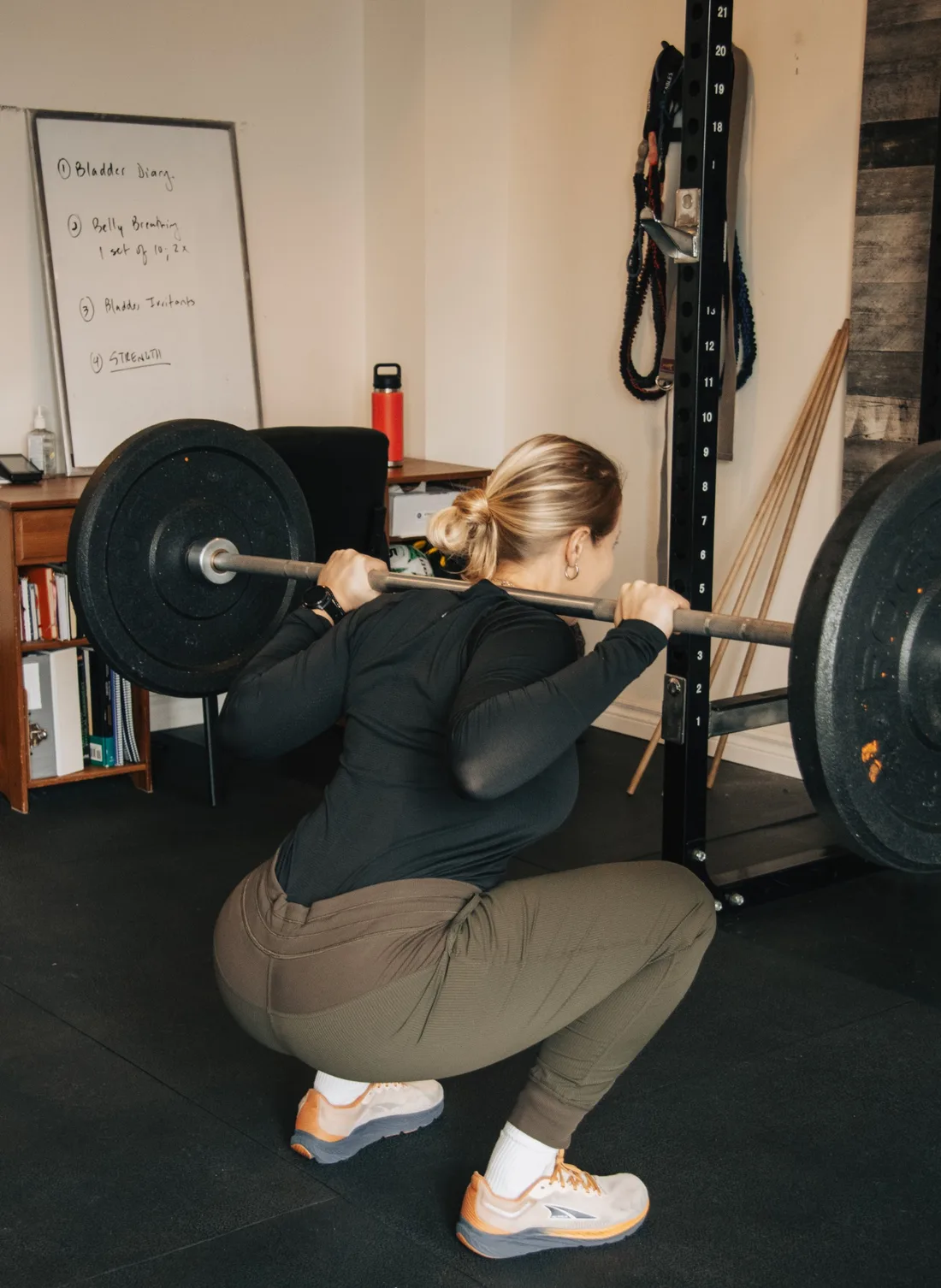
Ellie’s clinical focus
Ellie is a Registered Physiotherapist with a Master of Science in Physiotherapy from McMaster University and a kinesiology background from Brock. Her postgraduate training includes urinary incontinence, pelvic pain, pregnancy and postpartum care, female athletes and return to higher-level activity.